

Modern iGaming covers multiple screens, and I frequently switch between desktop, tablet, and phone. When trying Shuffle Casino in Canada, I focused on seamless cross-device synchronization—not just login continuity, but unified balances, live game states, bonus progress, and an intangible sense of presence. I mimicked real-world switching: morning desktop sessions, phone play on a downtown patio, and hotel sofa tablet action. Over several days, I challenged the platform through rapid handoffs that any global player would recognize. The results transformed what I expect from a modern crypto-friendly casino, uncovering an architecture that treats every screen as a single continuous environment.
Speed, UI Consistency, and Error-Free Responsiveness
Syncing features mean nothing if the interface fails across form factors. I examined button sizing, font rendering, and touch targets. Shuffle Casino’s adaptive layout scaled flawlessly from a 27‑inch monitor to a compact phone screen, preserving the game grid and navigation bar intuitively placed. Animations stayed smooth even when I forced background app refresh on the iPhone during heavy slot particle effects, a testament to a efficient front‑end that delivers assets efficiently everywhere.
Under restricted network, the platform degraded gracefully. It temporarily substituted lower‑resolution card textures until bandwidth stabilized, then sharpened visuals back up. I experienced zero unscheduled logouts during any device switch and no expired session tokens. The only tiny quirk was a one‑second delay in bet history refresh on the Android tablet when rapidly jumping between six games, but records corrected themselves. Compared to market benchmarks, this release feels polished and globally ready.
Instant Game State Handoff Without Losing a Spin
I triggered a bonus buy round on my laptop and immediately loaded the same slot on my phone while the round was pending. Shuffle Casino showed a “round pending” screen for a short time, then completed the outcome synchronously on both devices—the win amount showed up simultaneously, no discrepancy. I replicated this with a blackjack hand: hitting a card on desktop, switching to tablet mid‑hand, and seeing the updated score and identical decision state, with no resets and no double bets.
The toughest test required running the same slot on two devices at once. Shuffle Casino instantly ended the older session with a courteous “This game is now active on another device” message, preventing against duplicate play. The newer session took over the full state—bet amount, autoplay settings. This safeguard demonstrates synchronization isn’t just about convenience; it’s a safeguard against costly errors that could occur from fragmented multi‑screen use in a busy household.
My Testing Rig: Devices, Internet Browsers, and Internet Conditions
Devices and Connection Arrangement
I assembled a wide-ranging fleet to eliminate bias. A Windows 11 laptop operated latest Chrome, an iPhone 14 ran Safari with the Shuffle web app saved to the home screen, and an iPad Air acted as the leisure Wi‑Fi device. I included a mid-range Android tablet on Firefox to mimic other browsers. Each device had distinct resolutions and touch responsiveness, so I could assess UI adaptation separately from sync performance. I checked that no device shared a session and each started with a clear cache, insulating every handoff.
Connectivity blended fiber internet, 5G mobile data, and a restricted hotspot that mimicked inconsistent café Wi‑Fi. This variety is vital because synchronization weaknesses emerge when network quality varies. I deliberately toggled aeroplane mode to force reconnections and monitored whether Shuffle Casino’s state management withstood the turbulence without damaging balances or dropping active bets. The following list captures my core gear.
- Dell XPS 15 (Windows 11, Chrome) – primary desktop tester
- iPhone 14 (iOS 17, Safari) – fast mobile sessions
- iPad Air (5th gen, Safari) – sofa and travel companion
- Samsung Galaxy Tab A8 (Android 13, Firefox) – alternative browser variety
- 5G mobile network and throttled 3G hotspot for degraded connectivity
Internet Settings and Response Time Measurement
I calculated latency with browser developer tools, tracking WebSocket handshake times and balance refresh API calls. Under steady fiber, a desktop deposit showed on mobile in under two seconds. Even forcing a Wi‑Fi to 5G handoff never prompted a re‑login. Intentional 3G throttling led to a brief four‑second reconnecting spinner, after which my roulette bet state remained precisely intact. This demonstrated Shuffle’s session tokens anchor to the account, not the connection, delivering strong state recovery when networks fail.
Instant Account Synchronization: Single Sign-in, Access All Platforms
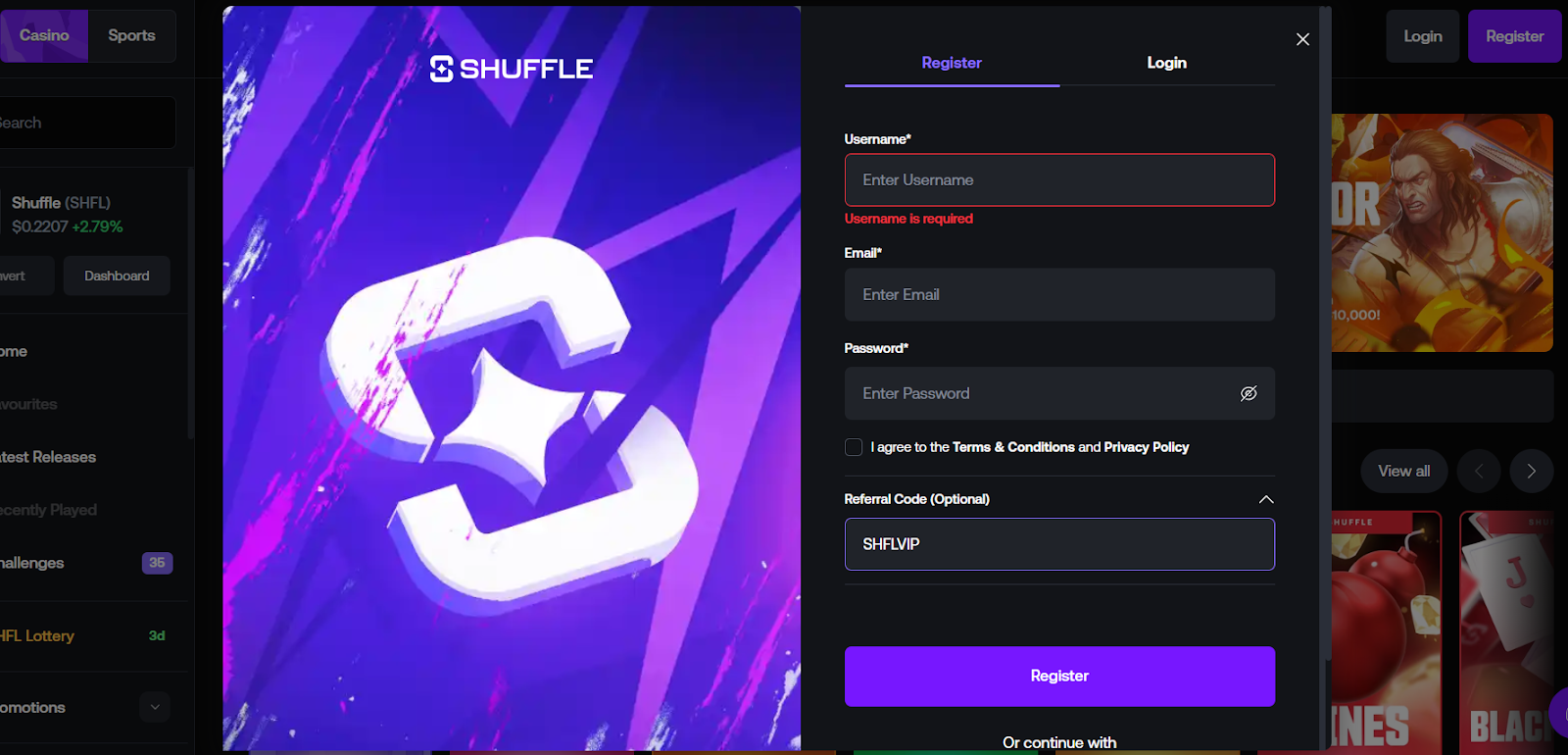
I began by establishing an account on desktop, confirming email, adding crypto, then instantly loading the casino URL on my phone. Shuffle’s progressive web approach identified my active token immediately; I entered the lobby without retyping credentials. That frictionless handoff impressed me because many casinos demand re‑login when IP or user agent shifts, disrupting momentum. Here I sensed genuinely untethered, with identity traveling as easily as the device in my hand.
Later I deliberately logged out on the tablet while maintaining the desktop session active. The desktop remained fully functional, and the tablet presented a clean login screen with zero data bleed. Logging back in on the tablet reunited me with recent game history, balance, and active bonuses within a heartbeat. Shuffle Casino never handles a new login as a reset event, so globetrotters escape the panic of being locked out from a different country’s IP. That harmony between accessibility and protection impacted me immediately.
Bonuses and Loyalty Tracking Across All Platforms
I claimed a welcome match bonus on the iPhone, met wagering contributions with slot spins on the desktop, and watched the percentage tracker tick up identically on both interfaces. Even after clearing cache and switching to the Android tablet, the remaining wagering requirement never fell out of sync. This gave me enormous peace of mind; bonus abuse fears shouldn’t punish honest multi‑device players, and Shuffle Casino’s unified session design removes that friction completely.
Loyalty points and VIP progression behaved cohesively. My points tally rose in near real time, and the loyalty bar progressed with zero lag. Rakeback hints and cashback notifications appeared on every logged‑in screen, preventing the frustration of missing a limited‑time claim because I’d checked only one device. For jet‑setting players who start a session on a laptop in one city and finish on a phone in another, this synchronized loyalty layer seems like an ever-present pit boss that never ignores your action.
Why Cross-Device Synchronization Creates a Premium Casino Experience

Smooth synchronization is the cornerstone of player trust. Switching devices carries your emotional and financial state; a lagging balance, dropped bet slip, or stuck live stream mid-hand erodes confidence instantly. I view synchronization as the supreme stress test for a casino’s backend, especially when cryptocurrency transactions introduce speed demands. Shuffle Casino works where zero friction is anticipated, and I needed to see if its real-time engines handled rapid device switches without forced logouts or glitches. This was about the invisible plumbing that holds a session together when hardware and location vary radically.
Cross-device harmony also shapes loyalty. I’ve quit platforms that ignored game history or insisted on constant re-authentication, killing immersion. Shuffle Casino offers a unified account layer, but marketing means nothing without pressure. I crafted scenarios that would make infrastructure strain: simultaneous logins, hotspot handoffs, and abrupt app closures during live rounds. Observing how the platform restored state after interruption offered me a clear lens into its engineering discipline. The sections below document every surprise, stutter, and victory.
Account Balance and Transaction Sync for Premium Trust
Deposit and Withdrawal Sync
A tiny USDT deposit on desktop displayed on my phone’s dashboard before I could even unlock the screen. Transaction history synchronized across all devices with matching timestamps and confirmations. When I cashed out from the tablet, Casino Shuffle User Experience, the pending status right away replaced the balance on my phone and laptop, preventing the nightmare of playing with funds already queued for payout. This real‑time financial unity is critical in crypto casinos where blockchain confirmations already introduce latency; the platform’s own sync layer must never add to it.
Mid-Session Top-Ups
I exhausted my balance near zero during a lightning roulette session on the laptop, then promptly deposited crypto via phone. Seconds after one blockchain confirmation, the funds were added, and the roulette screen’s betting controls turned on without manual refresh. The phone displayed the same numeric balance instantly. This seamless top‑up flow mimics a physical chip runner https://www.ibisworld.com/denmark/industry/game-toy-manufacturing/200199/ in a land‑based venue but runs at digital speed, proving the sync engine ties deeply into the payment gateway for uninterrupted high‑stakes play.
Interactive Dealer Tables: Maintaining the Social Excitement Unbroken
Rejoining a Live Stream During the Round
I entered a real-time blackjack game on iPad, placed a side bet, then exited the browser intentionally. Opening the identical lobby on my Windows laptop, the system detected my reserved spot and active bet immediately. The broadcast resumed with minimal buffering, and my chips stayed precisely where I’d put them. The dealer kept dealing, and I didn’t lose my position. That’s true presence without a lost deal, the gold standard of live dealer continuity.
Messaging and Dealer Engagement Continuity
My earlier messages with the dealer and players was still shown after the transition, keeping the social connection. A recent note I entered on the laptop showed up without interruption in the stream. This focus on social elements turns a broadcast into a continuous environment that moves with you. I’ve tested casinos where device change clears dealer history, disrupting relationships built over hours. Shuffle Casino created the impression like the same person at the identical table, no matter the device.
Protected Session Management That Always Drops the Ball
I logged in on a new device from a different IP while my main session stayed active. Shuffle Casino immediately sent a device authorization prompt to my email and halted sensitive actions on the new device until approval. That minimal friction secures without locking accounts, exactly what travelers need when switching between hotel networks and mobile data. After approval, the new device inherited the full session without kicking out the original, though game locking prevented duplicate https://pitchbook.com/profiles/company/536010-31 play.
I recreated a lost phone by remotely clearing mobile browser data. My desktop session remained unaffected. Logging back into the cleaned phone, the two‑factor authentication flow reestablished session state securely, and the previous token was revoked instantly—no residual sensitive data on a stale screen. These subtle security rituals persuaded me that Shuffle Casino’s cross‑device sync is designed with a privacy‑first mindset. It’s the invisible engineering that lets you pursue jackpots from a tablet in a café without ever questioning if your funds are quietly exposed.


